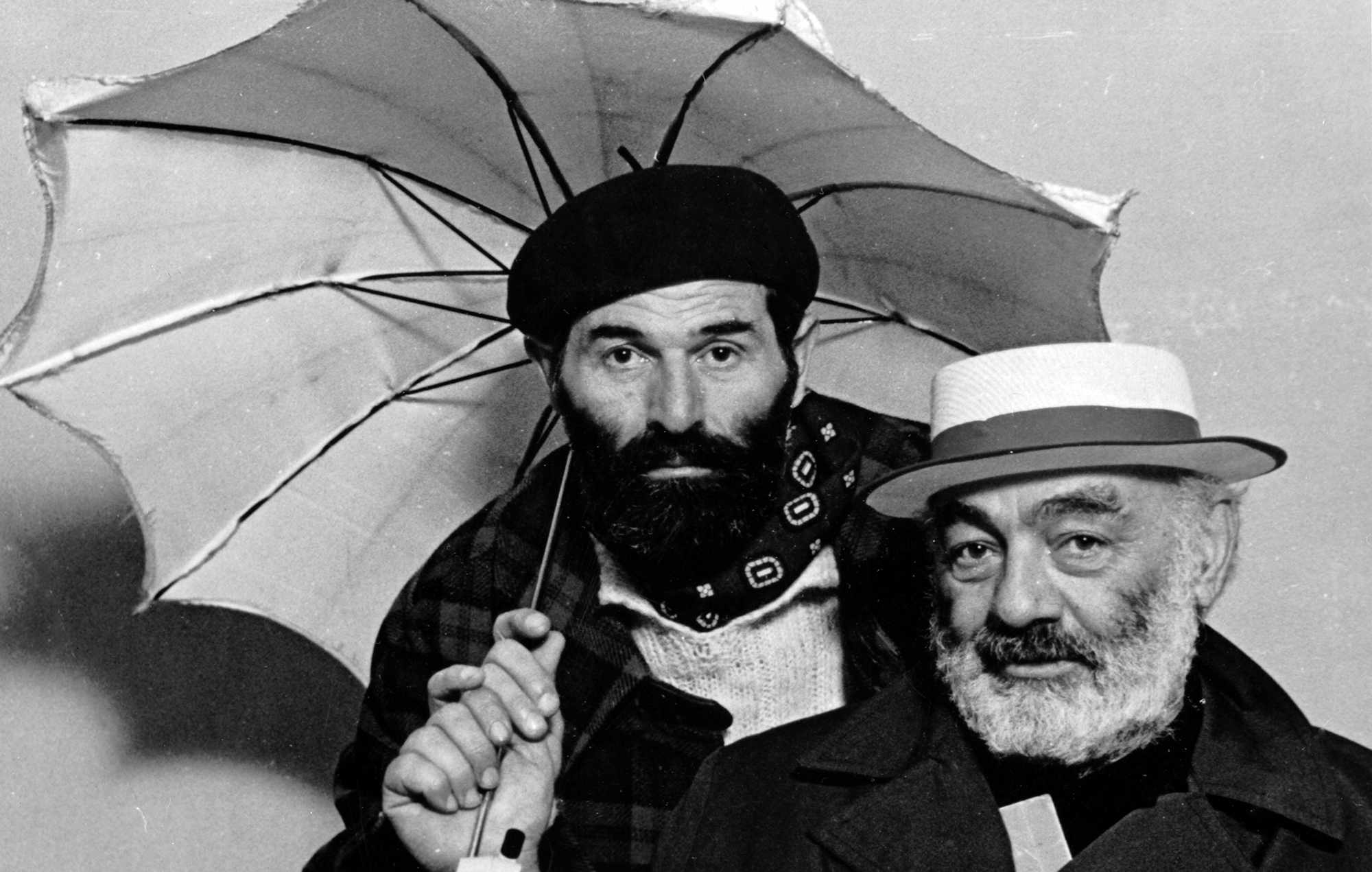

“Vartanov…brother-in-arts…You possess everything an artist needs: mind, kindness, principles, freedom…Create…Perhaps, you’re the only friend who compels me to live…”
—SERGEI PARAJANOV
“Vartanov’s film Parajanov: The Last Spring … exemplifies the power of art over any limitations…”
— FRANCIS FORD COPPOLA
“We have to make sure that the work of seminal artists like Vartanov is preserved…His films, made under the harshest conditions and repression, are crucial to the important heritage of world cinema.”
— AGNIESZKA HOLLAND
Mikhail Vartanov was blacklisted for his debut film, The Color of Armenian Land (1969), where he portrayed his dissident friends, the genius Parajanov (imprisoned in 1973) and the modernist Minas (assassinated in 1975). When Vartanov’s artistic freedom was restored 20 years later, he responded with Minas: A Requiem (1989) and Parajanov: The Last Spring (1992) – his masterpiece, which was admired by many of cinema’s most important luminaries, such as Francis Ford Coppola, Tonino Guerra and Martin Scorsese.
For bravely campaigning for the release of the imprisoned Parajanov, Vartanov (Михаил Вартанов, Միքայել Վարդանով) was fired from the Soviet Armenia’s sole film studio and deprived of his only source of income (since the film industry, like all others, was fully government funded and controlled). Parajanov reacted with a letter written to Vartanov from the prison, “You and your purity are colliding with circumstances and predators”.
Thanks to the tireless lobbying of his (V.G.I.K.) classmate Artavazd Peleshian and Gennadi Melkonian, Vartanov was able to work as their cinematographer and exquisitely lensed two films that became classics: Seasons (1975) and Mulberry (1980).
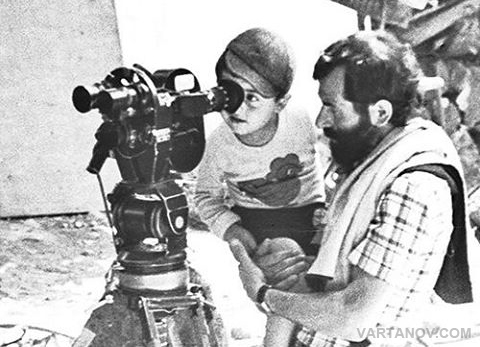
Not until Paradjanov was taken off the blacklist in 1984 (due to petitions by celebrities) was Vartanov also permitted to direct. Even though these were studio-imposed films, such as Roots (1984), he breathed into them his trademark soulfulness.
The publication of his revered Unmailed Letters essays in the top literary magazines spurred new writings, as well as their translations in Europe, notably in Cahiers du Cinema in 1986. His fierce Erased Faces (1987) terrified the colleagues who doubted the permanence of Gorbachev’s reforms. The film remained unseen (like all his films made in the USSR because the studio’s leadership was used to suppressing Vartanov, first to score points with the regime, and later – when the Iron Curtain began to rise – to avoid competition).
In the war-torn and blockaded Armenia of the early 1990s, which was plagued by severe shortages of food, water, transportation and electricity, Vartanov’s health, already compromised by decades of harassment, worsened. Despite the serious limitations, he persisted and, for the first time, independently produced what would be his final film, Parajanov: The Last Spring (1992).
In Moscow, in 1993, Vartanov accepted the Russian Academy of Cinema Arts Award for Parajanov: The Last Spring (1992), and, in a characteristically modest move, simply bowed, and uttered not a single word to the millions watching the live broadcast.
Festival invitations for his masterwork enabled his escape to California, but his early films remained inaccessible and under the control of his old suppressors for the rest of his life. He did not witness the first retrospective and exhibition of his films and art at the renowned Busan International Film Festival, which took place just three years after he passed away in Hollywood.
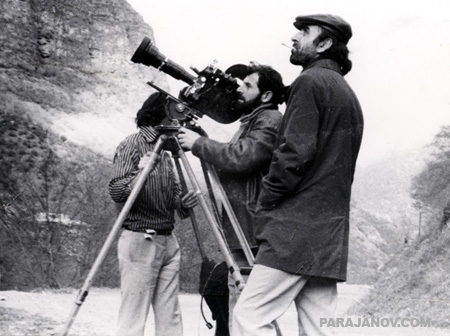
MIKHAIL VARTANOV FILMOGRAPHY
THE COLOR OF ARMENIAN LAND (1969)
AUTUMN PASTORAL (1971)
AND SO EVERY DAY (1972)
AWAITING (1973?)
KAJARAN (1974) – fired
cinematographer — SEASONS (1975)
cinematographer — WILLIAM SAROYAN (1976)
cinematographer — MULBERRY (1980)
ROOTS (1984) – rehired as director
ERASED FACES (1987)
IN THIS STONE IS MY SOUL (1989)
MINAS: A REQUIEM (1989)
PARAJANOV: THE LAST SPRING (1992)
CHRONOLOGY
“In our land, the government manufactures the biography of the artist. It honors and awards one, for nothing, and it dishonors and imprisons the other. A wise government – it desires to turn both into obedient slaves.”
— MIKHAIL VARTANOV
1937
Born on February 21 in Grozny, Russia, Soviet Union.
1950-1960
Becomes the youngest professional photographer in town, also works as a movie projectionist.
1961-1966
Studies at the world’s oldest film school, Moscow Film Institute VGIK (established by Eisenstein, Dovzhenko, and others), where his teachers include Anatoli Golovnya (the cinematographer of Vsevolod Pudovkin’s 1926 classic “Mother”) and Boris Volchek (the cinematographer of Mikhail Romm’s 1937 classic “Lenin in October”). Artavazd Peleshian and Mikhail Vartanov befriend at VGIK. With his African classmate Costa Diagne shoots their diploma film “Men of the Dance” (Monologue of the Mask, Люди танца), about the art of Africa, which wins Dakar’s Golden Antilope Award, and earns much publicity in Moscow’s leading newspapers, including the preeminent Pravda.
1967-1973
Sergei Parajanov and Mikhail Vartanov become friends in Armenia. Vartanov directs The Color of Armenian Land, Autumn Pastoral, And So Every Day, and coins the term “direction of undirected action.” Receives the Cinematographer of the Year Award at the annual USSR Film Festival for The Song of Eternity, a film he dislikes. Composer Tigran Mansurian and Vartanov work together and become friends.
1974-1979
Fired from Armenfilm Studios four months after Sergei Paradjanov’s imprisonment. After his friends Artavazd Peleshian and Gennadi Melkonian passionately petition the Moscow and Yerevan authorities to allow Vartanov to work, he collaborates with them on two classics: The Seasons of the Year (1975) and the Mulberry Tree (1979). Vartanov’s friend, the painter Minas Avetisian, is assassinated by KGB. The Oscar-winning American author William Saroyan nicknames Vartanov “Eyemoman” after the early 20th century movie camera Eyemo.
1980-1986
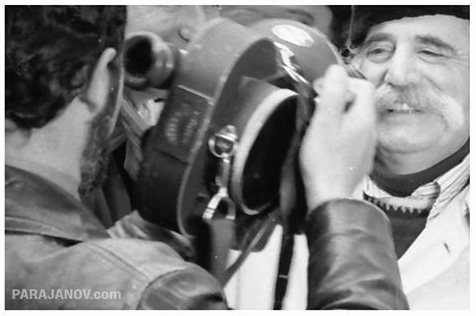
Publishes his essays on art and cinema, including in French, in Cahiers du Cinema. Teaches art, cinema and photography at the university in Armenia. Makes his first film in a decade as a director, The Roots, after all filmmakers at Armenfilm Studios refuse to direct it, finding the subject uncinematic. Celebrates the Old Russian New Year with Sergei Paradjanov and Andrei Tarkovsky.
1987-1992
Directs Erased Faces (1987), Minas: A Requiem (1989), Parajanov: The Last Spring (1992), and the latter creates a sensation at its premieres in Russia and Armenia, as well as influences numerous future films, books and writings about Paradjanov. The legendary Tonino Guerra, the screenwriter of Fellini and Antonioni masterpieces, attends the Russian premiere of Parajanov: The Last Spring, and praises the film in writting.
1993-1995
Vartanov receives the Russian Academy of Cinema Arts Award in Moscow for Parajanov: The Last Spring. Arrives to the United States for the American premiere at the National Art Gallery in Washington DC. A private screening for poet Allen Ginsberg organized by Jonas Mekas at the Anthology Film Archives. Moved by the film, Ginsberg sheds a tear. Receives the Golden Gate Award from the oldest American film festival, the San Francisco International. Moves to Hollywood, California.
1996-2004
Turns his home into a studio and experiments with photography, video, collages, drawings, assemblages, painting, and writing. Attempts by several festivals in Europe, Asia and US to hold retrospectives and exhibitions of Vartanov’s work fail due to hinderance and bureaucracy of Armenia’s cultural authorities, many of whom are his old suppressors and their apathetic sympathizers. At the invitation of the American Film Institute, Vartanov makes the first public appearance in nearly a decade at the Los Angeles Exhibition of Russian Cinema to present Shadows of Forgotten Ancestors, alongside William Friedkin, who presents Ivan the Terrible, Leonardo DiCaprio, who introduces Battleship Potemkin, and Peter Bogdanovich, who hosts the projection of The Ballad of a Soldier. Vartanov receives the Golden Palm Award at the Beverly Hills Film Festival.
2005
Visits Armenia, receives an avalanche of media coverage, but is ignored by all cultural authorities, and he is again unable to get his suppressed early films out of Armenia’s archives.
2007
Member of the jury at the Beverly Hills Film Festival. Member of the jury at the Navarra International Documentary Film Festival, responsible for presenting Spain’s first annual Jean Vigo Award. Vartanov’s last public appearances at the Europian screenings of Parajanov: The Last Spring are attended by Jean Vigo’s daugher (the film critic) Luce Vigo, Andrei Tarkovksy’s sister Marina Tarkovsky, Aleksandr Gordon (co-director of Tarkovsky’s Killers), Jean Carzou’s son (the author) Jean-Marie Carzou, and the actress Sofiko Chiaureli (Sayat Nova).
2008
Works on his book about Sergei Paradjanov, and edits the documentary on the painter Evo (unfinished).
2009
Passes away on December 29 (announced on New Year’s Eve). Laid to rest at a Hollywood cemetery where Buster Keaton, Bette Davis, and Fritz Lang also rest in peace.
–
2010
Parajanov and Vartanov families establish the Parajanov-Vartanov Institute in Hollywood.
2012
Busan International Film Festival organizes the historic Eternal Travelers for Freedom: Sergei Parajanov and Mikhail Vartanov retrospective and exhibition in South Korea.
2018
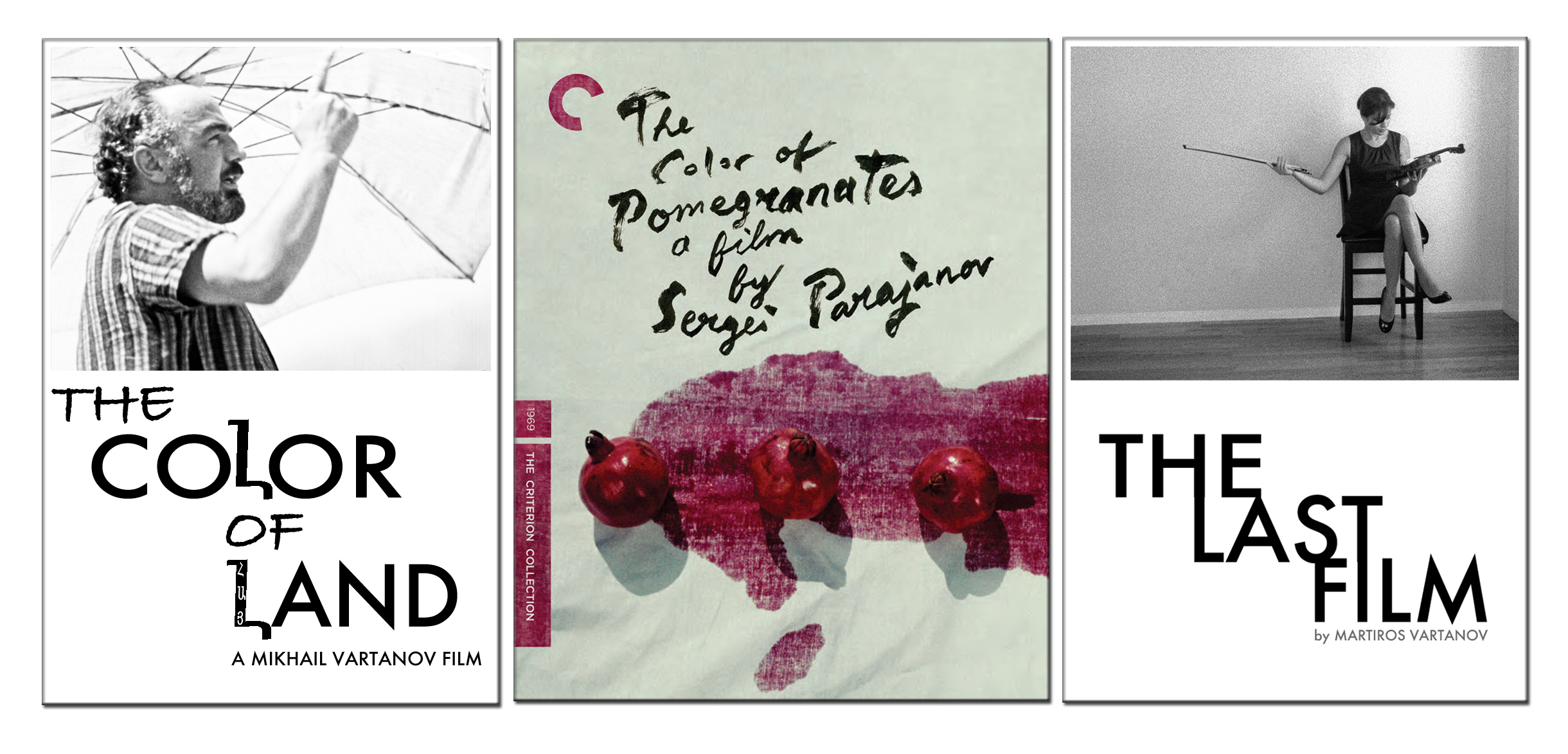
The Criterion Collection‘s highly anticipated Blu-ray release includes the restored masterpiece The Color of Pomegranates by Parajanov with Vartanov’s The Color of Armenian Land suppressed in 1969 and available for the first time in 49 years.
2020
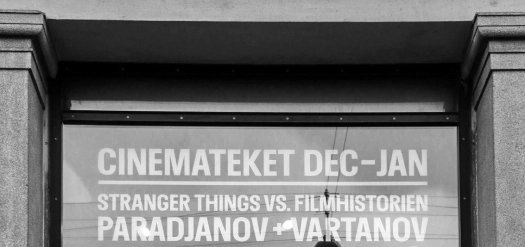
Parajanov + Vartanov film retrospective is organized by the Danish Film Institute at the Copenhagen Cinematheque.
2024

The (Oscars) Academy presents the world restoration premiere of Vartanov’s Parajanov: The Last Spring and Parajanov’s The Color of Pomegranates at Academy Museum of Motion Pictures in Los Angeles to mark Parajanov’s centenary.
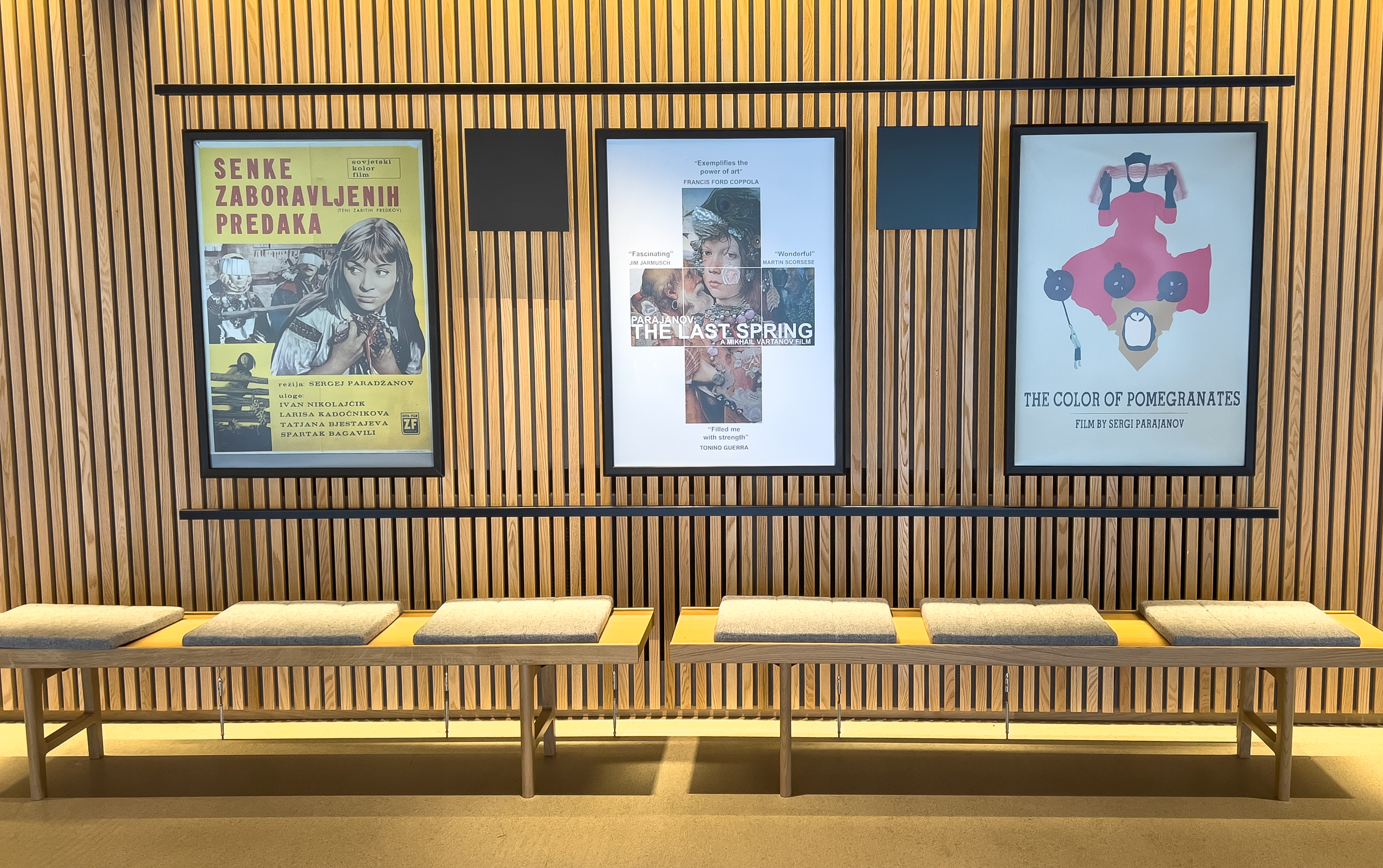
The Oslo Cinematheque presents the Parajanov/Vartanov retrospective, entitled Filmkunstens fantomer.


You must be logged in to post a comment.